
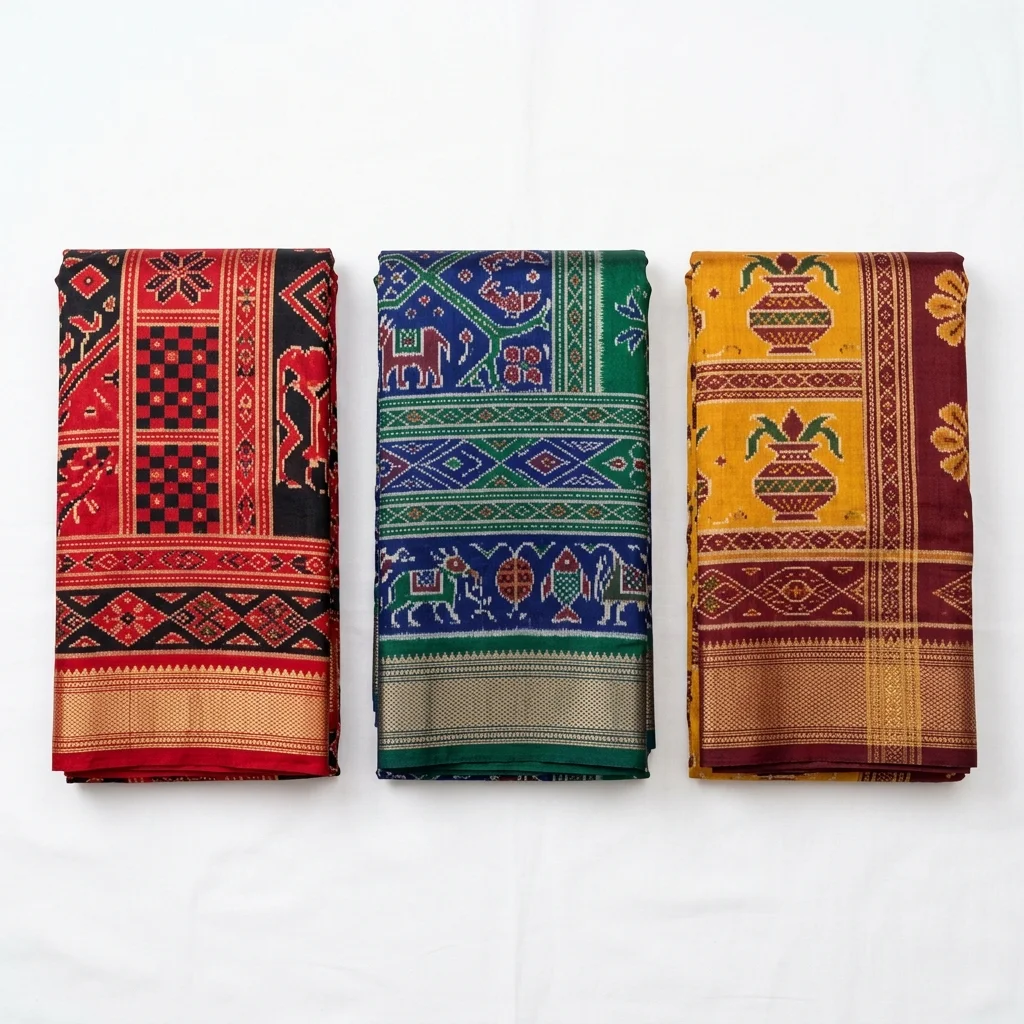
You have shortlisted two beautiful Odisha sarees for an upcoming occasion. Both are absolutely stunning, both claim to be pure handloom, and both carry the rich, unmistakable aesthetic of eastern Indian textiles. But one is labeled a "Sambalpuri" and the other is a "Bomkai." As you zoom in on the photos, they might even seem to share similar patterns.
If you are confused about the difference between Sambalpuri and Bomkai sarees, you are not alone.
Because the handloom clusters of Odisha have interacted, shared techniques, and evolved together over decades, distinguishing between a Sambalpuri and a Bomkai saree can sometimes feel like trying to separate salt from water. However, beneath the surface of the dye, these two iconic drapes are created using fundamentally different weaving techniques.
Whether you are shopping for your bridal trousseau, a festive gift, or comfortable office wear, understanding how these textiles are made will completely change the way you appreciate them. This guide will walk you through the technical differences, the cultural motifs, and practical advice on which Odisha handloom suits your needs.
The Short Answer: It's All About the Weave
If you only have thirty seconds to understand the difference, remember this:
Sambalpuri is defined by the Bandha (Ikat) technique. The design is created by tying and dyeing the yarn before the weaving even begins. The pattern is embedded directly into the threads, giving it a flat texture and nearly identical designs on both sides of the fabric.
Bomkai is defined by an extra-weft weaving technique. The weaver uses supplementary threads on the loom to manually "embroider" intricate, raised motifs onto the fabric as they weave, primarily on the pallu and borders.
To put it simply: Sambalpuri is magic done in the dye bath, while Bomkai is magic done on the loom.
What Makes a Sambalpuri Saree Different?
When we talk about a Sambalpuri saree, we are talking about the mastery of Bandha kala—the regional term for Ikat.
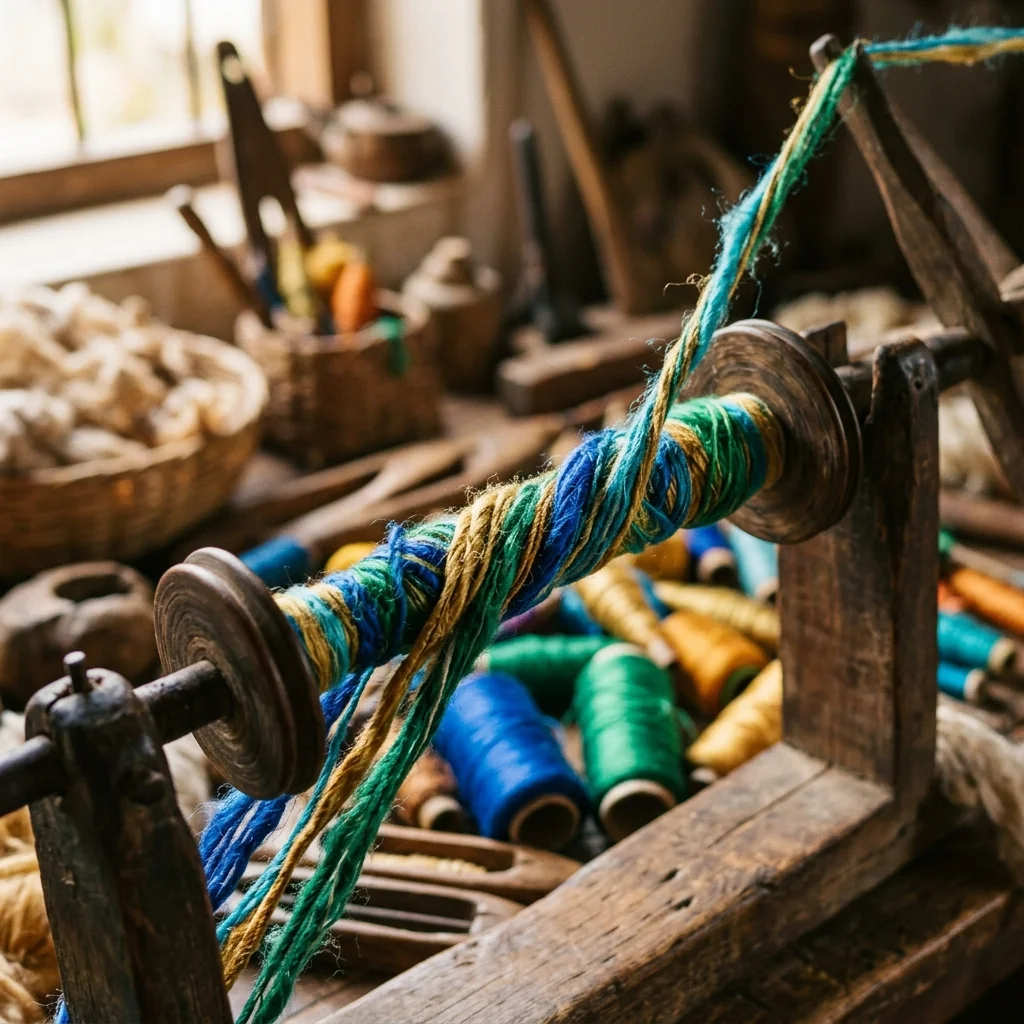
Imagine taking a bundle of white silk or cotton yarn and mentally calculating where every single millimeter of color needs to be to form a perfectly proportioned conch shell when woven. The master artisans of western Odisha (primarily in districts like Bargarh, Sambalpur, and Sonepur) tie these yarns tightly with bindings to resist dye, dip them in color, untie them, and repeat the process for every shade required.
Because the threads are dyed before they hit the loom, you will notice a few distinct characteristics when you handle a genuine Sambalpuri saree:
- The Feathered Edge: The edges of a Sambalpuri motif are rarely perfectly sharp. Because the dyed threads shift microscopically during the hand-weaving process, the designs have a slightly jagged, stepped, or "blurred" outline. This is the ultimate signature of authentic Ikat.
- The Reverse Side: Because the color is locked deep inside the yarn itself, the pattern is usually clearly visible and vibrant on both the front and the reverse side of the saree.
- The Motifs: Sambalpuri weaves rely heavily on geometric interpretations of culturally significant symbols, such as the Shankha (conch), Chakra (wheel), and Phula (flower).
What Makes a Bomkai Saree Different?
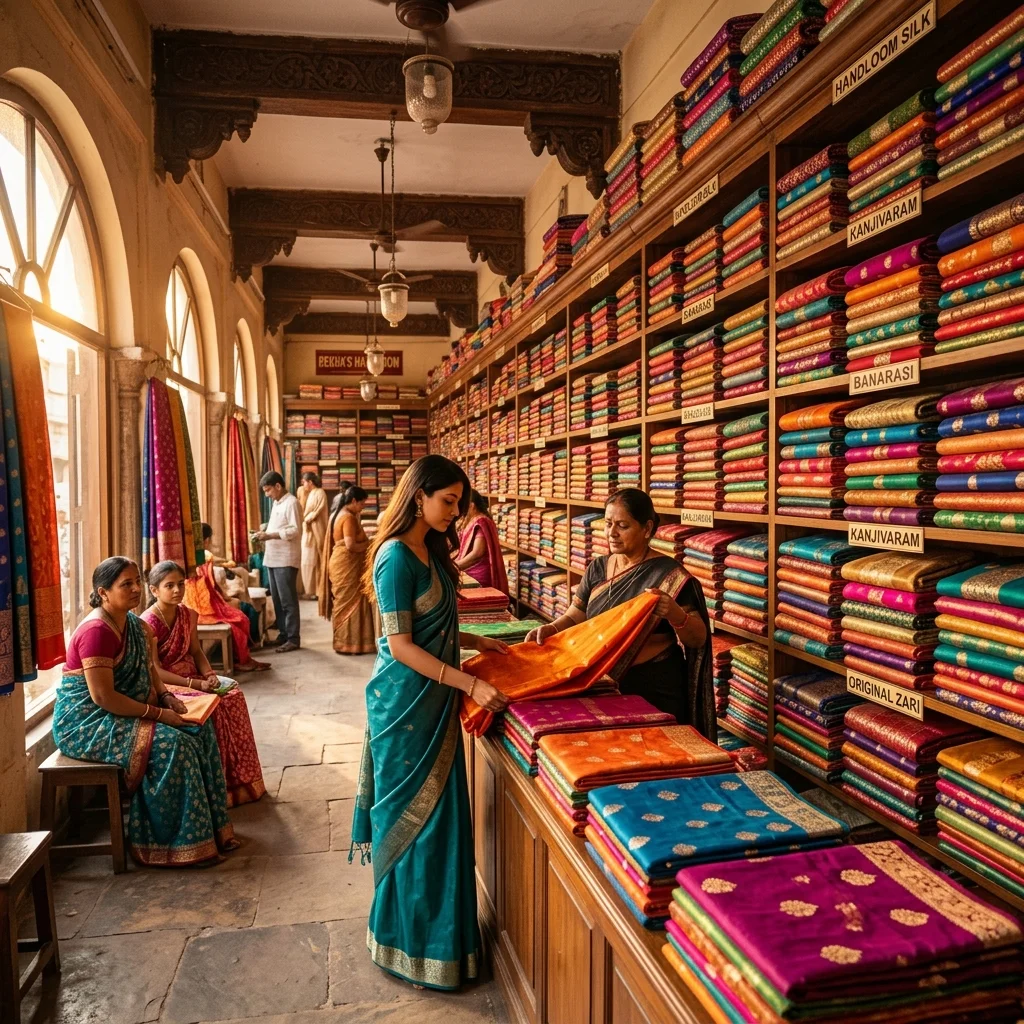
Bomkai sarees originated in the small village of Bomkai in the Ganjam district of Odisha, but they achieved their modern renown when the technique migrated to the weavers of Sonepur (Subarnapur).
Unlike Sambalpuri Bandha, a traditional Bomkai saree relies on the Jala technique, which involves inserting extra weft threads across the warp to create intricate, highly decorative motifs.
When you examine a Bomkai saree, you will notice:
- Raised Texture: Because the designs are created with supplementary threads rather than pre-dyed base threads, the motifs often feel slightly raised or textured to the touch, almost resembling fine embroidery.
- Nature-Inspired Motifs: Bomkai weaving is heavily inspired by local flora, fauna, and folklore. Look closely at a Bomkai pallu, and you will likely spot the Rui Machha (carp fish, symbolizing prosperity), Koinchha (tortoise), Karela (bitter gourd vine), Mayur (peacock), or the Padma (lotus).
- Distinct Reverse Side: Because extra threads are carried across the back of the fabric to create the raised motifs on the front, the reverse side of a Bomkai pallu will often show floating threads or tiny cut ends, completely unlike the flat, nearly identical reverse of a pure Sambalpuri Ikat.
The Hybrid: Sonepuri Bomkai
This is where many buyers get understandably confused. In the modern era, the weaving clusters of Sonepur beautifully combined these two techniques. Today, if you buy a "Sonepuri Bomkai," you will very often find a Sambalpuri Ikat (Bandha) pattern woven into the main body of the saree, paired with heavy, intricate extra-weft Bomkai work on the pallu and the borders.
Sambalpuri vs Bomkai Comparison Table
| Feature | Sambalpuri Saree (Pure Ikat) | Bomkai Saree (Extra-Weft) |
|---|---|---|
| Origin Region | Western Odisha (Bargarh, Sambalpur, Sonepur) | Originally Ganjam, perfected in Sonepur |
| Core Technique | Bandha kala (Tie-and-dye Ikat) | Jala (Traditional extra-weft supplementary weaving) |
| Visual Texture | Flat, smooth surface with nearly identical reverse sides. | Raised, embroidery-like motifs, often with thread floats on the reverse. |
| Edge Appearance | Slightly "feathered" or stepped motif edges. | Solid, clear structural outlines on the extra-weft motifs. |
| Common Motifs | Geometric forms, Pasapali (checkerboard), Chakra, Shankha. | Rui Machha (fish), Koinchha (tortoise), Karela (vine), Kumbha (temples). |
| Primary Focus | The entire body of the fabric relies on dyed yarn alignment. | The pallu and borders act as the canvas for heavy supplementary thread work. |
Choosing for Weddings and Bridal Wear
Both sarees are highly prestigious choices for a traditional Indian wedding, but they serve slightly different aesthetic purposes.
Bomkai Silk for the Bride: A heavy Sonepuri Bomkai silk saree is widely considered one of the most prestigious bridal drapes in Odisha. Because the extra-weft technique allows weavers to pack the pallu with dense, intricate, brightly colored thread work (and sometimes zari), a Bomkai silk carries an undeniable weight and grandeur. The rich, raised motifs of peacocks and temple spires look incredibly regal under wedding lights.
Sambalpuri Silk for the Trousseau: While Sambalpuri silks are certainly worn by brides, they truly shine as highly sophisticated additions to a wedding trousseau or for attendees. A heavy Sambalpuri Pasapali (the striking checkerboard motif) woven in pure mulberry silk offers a bold, striking geometric elegance that commands attention without relying on heavy embroidery.
Choosing for Festivals and Pujas
During major festivals like Diwali, Durga Puja, or Rath Yatra, the choice often comes down to cultural symbolism.
A traditional Sambalpuri cotton or silk saree featuring the conch, wheel, and lotus motifs is deeply tied to the Jagannath culture. Wearing these symbols during religious ceremonies is considered highly auspicious and respectful of the region's spiritual heritage.
A Bomkai saree, with its prominent Rui Machha (fish) or Kumbha (temple border) motifs, is equally celebratory. The fish motif in particular is viewed as a symbol of abundance and success, making it a very popular choice for festive gifting or family gatherings.
Choosing for Everyday and Office Wear
When it comes to comfort and long-hour wearability in the Indian climate, Sambalpuri cotton is often the winner.
Because the Ikat technique relies entirely on dyeing the base threads rather than adding heavy supplementary threads, a pure cotton Sambalpuri saree remains incredibly breathable, lightweight, and flat. It drapes close to the body and softens beautifully over time. The geometric, feathered patterns also provide a highly sophisticated, intellectual aesthetic. Pure cotton Sambalpuri sarees are an exceptionally popular choice for office wear and academic settings.
While cotton Bomkai sarees certainly exist and are beautiful, the heavy extra-weft work on the pallu and borders can make them feel slightly heavier or more formal, which some women prefer to save for specific events rather than daily office wear.
How to Choose Between Them (Buyer Scenarios)
Still unsure? Consider these practical scenarios:
- Choose Sambalpuri if: You love clean geometric patterns, value the mind-boggling mathematics of tie-and-dye, want a saree that looks beautiful from both sides, and prefer a flat, incredibly soft drape that feels like a second skin.
- Choose Bomkai if: You love the look of intricate embroidery, enjoy identifying nature-inspired motifs like birds and vines, want a heavy and highly ornate pallu that photographs beautifully, and appreciate a saree with rich textural contrast.
- Choose a Sonepuri Bomkai (The Hybrid) if: You simply cannot decide and want the best of both worlds—a beautifully tie-dyed Ikat body anchored by a heavily textured, regal extra-weft pallu.
A Note on Avoiding Imitations
Whichever weave you choose, you must be careful to avoid printed powerloom imitations.
As detailed in our guide on How to Identify an Original Sambalpuri Saree, the easiest way to spot a fake Sambalpuri is to look for razor-sharp edges (real Ikat is always slightly blurred) and a blank reverse side.
For a Bomkai saree, look closely at the heavy motifs on the pallu. Genuine extra-weft weaving will clearly show how the supplementary threads are integrated into the fabric, often with tiny cut ends or floats on the reverse side. If a "Bomkai" pallu is completely flat and the intricate fish or temple motifs look like they were painted or digitally stamped onto the surface, it is a machine-made print.
Always look for a Silk Mark when buying pure silk, and do not hesitate to ask the seller which district the saree was woven in.
The Verdict: Which is Better?
In the world of authentic handlooms, "which is better" is entirely the wrong question.
Neither technique is inherently superior. A master artisan weaving a Sambalpuri Bandha must possess a brilliant mathematical mind to align thousands of pre-dyed threads perfectly. A master artisan weaving a Bomkai must possess incredible manual dexterity and patience to weave supplementary threads row by row into complex pictorial shapes.
The right choice depends entirely on your personal style, the occasion, and which technique speaks to your aesthetic sensibilities.
Frequently Asked Questions
Is Sonepuri the same as Bomkai?
Sonepur (Subarnapur) is a major handloom cluster in Odisha that became famous for perfecting the Bomkai technique. Today, "Sonepuri" and "Bomkai" are often used interchangeably in the market to describe sarees with heavy extra-weft pallus, though the original technique traces its roots back to Bomkai village in Ganjam.
Are Bomkai sarees heavier than Sambalpuri sarees?
Generally, yes. Because Bomkai relies on extra supplementary threads woven into the borders and pallu, those specific sections of the saree will feel physically heavier and more textured than the flat, single-layer weave of a pure Sambalpuri Ikat.
Can I wear a Sambalpuri saree to a wedding?
Absolutely. Heavy pure silk Sambalpuri sarees, especially those featuring the striking Pasapali checkerboard motifs, are considered luxurious, highly sophisticated choices for weddings, receptions, and premium traditional events.
What is the fish motif called in Bomkai?
The traditional fish motif is called Rui Machha (carp fish). It is a very common and beloved design in Bomkai pallus, traditionally symbolizing prosperity, affluence, and good health.
Do Sambalpuri sarees have extra thread work?
A pure Sambalpuri saree relies on Ikat (dyed threads) rather than extra thread work. However, many modern Odisha sarees blend techniques, so it is common to find an Ikat body paired with an extra-weft border.
Which is better for daily office wear?
When choosing a Sambalpuri or Bomkai saree for the workplace, pure cotton Sambalpuri sarees are an exceptionally popular choice. Their breathable flat weave, comfortable drape, and sophisticated geometric patterns make them ideal for professional environments.
Embrace The Heritage
Understanding the difference between a Sambalpuri and a Bomkai saree is the first step toward becoming a true connoisseur of Indian handlooms. When you know exactly how much human labor and historical technique goes into every thread, draping the fabric becomes an entirely different experience.
Explore The Collection