
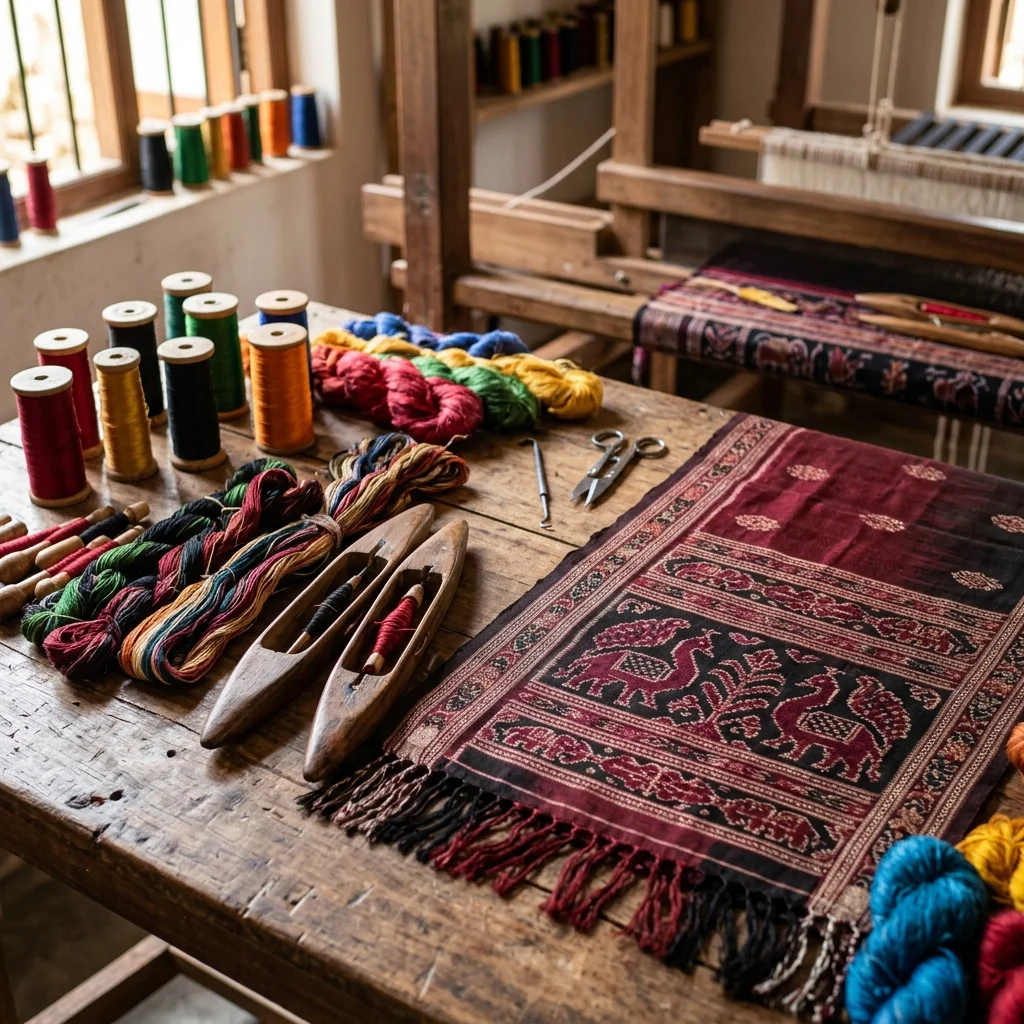
You are standing in a boutique, or perhaps scrolling through a website, and a beautiful Sambalpuri saree catches your eye. The colors are striking, the traditional motifs feel familiar, and the seller confidently assures you it is completely authentic. But a seed of doubt sets in. Is this an original Sambalpuri saree, or is it a machine-printed powerloom copy?
If you're buying your first Sambalpuri saree, this is probably the part you care about most.
The textile market today features many screen-printed imitations and mass-produced powerloom fabrics that mimic the traditional designs of Odisha handlooms. To an untrained eye, a synthetic, machine-printed fabric can look remarkably similar to a genuine handwoven piece that took a weaving family weeks to create. However, buying a printed imitation isn't just a matter of overpaying—it affects the legitimate, hardworking master weavers of Odisha who rely on this craft for their livelihood.
This guide is designed to help you navigate your purchase with confidence. We are going to look closely at the practical, physical signs of an authentic Sambalpuri saree, so you know what you are paying for and can wear your heritage drape with pride.
The Core Difference: Handloom vs. Powerloom
Before we get into the physical checks, it helps to understand how these sarees are actually made.
An authentic Sambalpuri saree is woven on a handloom using a technique called Bandha kala (Ikat). In this process, the yarn is tied and dyed according to a pre-calculated mathematical pattern before it is ever placed on the loom. The weaver then meticulously aligns these dyed threads by hand. It is a slow, manual, and highly skilled process that requires immense concentration.
A powerloom or printed saree, on the other hand, is generally made by machines. The fabric is often woven quickly from plain, uniform yarn (sometimes synthetic or commercial cotton), and the design is stamped or digitally printed onto the surface of the finished cloth. This method requires no tying, no natural dyeing of individual yarns, and takes a fraction of the time compared to hand-weaving.
Knowing this fundamental difference makes it much easier to spot the clues left behind by human hands.
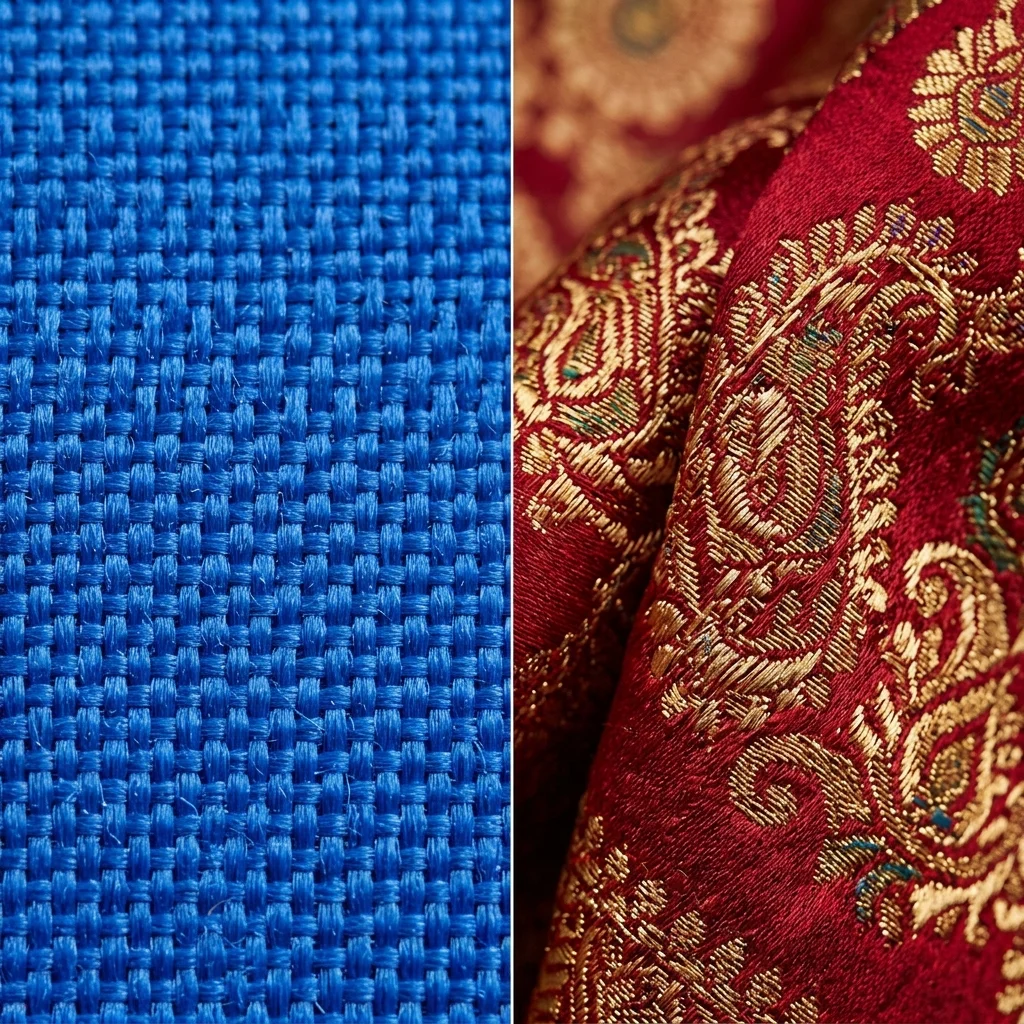
10 Ways to Check for an Original Sambalpuri Saree
Do not rely on a single visual test to prove authenticity. A smart buyer considers several of these signals together to build a complete picture of the textile's origins.
1. Flip It Over (The Reverse Side Test)
This is one of the easiest and most reliable ways to check if a Sambalpuri saree is a handwoven Ikat or a printed imitation.
Because the yarns in a Sambalpuri saree are dyed before they are woven, the color and the pattern are embedded directly into the fabric itself. When you flip an original Sambalpuri saree over, the design on the reverse side should look remarkably similar to the front. The colors generally remain vibrant, and the motifs are clearly visible on both sides of the cloth.
If you turn the saree over and the back is completely blank, heavily faded, or distinctly lighter than the front, you are likely looking at a printed fabric. The ink from a screen print typically only sits on one side of the material.
2. Look for the "Blurred" Edge (The Ikat Signature)
Take a very close look at the edges of the motifs—the flowers, the conch shells, or the geometric shapes on the saree.
In authentic Sambalpuri Ikat, the edges of the designs will rarely be perfectly sharp. Instead, they display a slightly jagged, stepped, or "feathered" appearance. This visual blur is not a flaw; it is the signature of Bandha kala. Because the artisan is manually aligning thousands of pre-dyed threads on a handloom, it is extremely difficult to achieve the mathematical sharpness of a digital print.
If the borders of the intricate designs are incredibly crisp, completely smooth, and razor-sharp without any stepped effect, it strongly suggests the pattern was applied by a machine rather than woven from tie-dyed yarn.
3. Feel the Fabric Weight and Drape
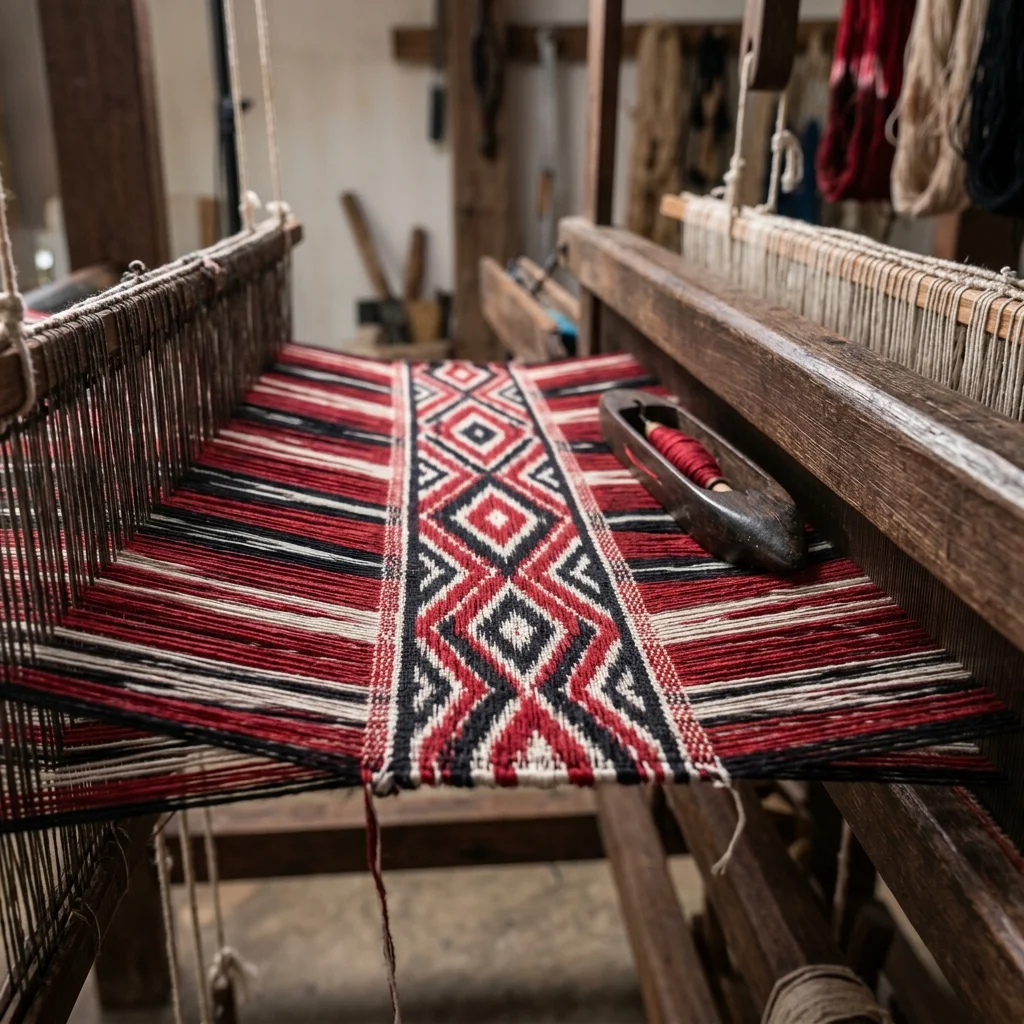
An original Sambalpuri saree has a distinct tactile quality. Whether it is pure cotton or pure silk, handwoven fabric generally feels a bit more textured and substantial than powerloom fabric.
Handloom cotton tends to be breathable, soft, and slightly porous, which allows it to drape beautifully and comfortably against the skin. Powerloom cotton or synthetic blends often feel unnaturally smooth, stiff, or slightly plasticky, sometimes due to the chemical sizing used in factories. Over time, many wearers find that an authentic handloom saree grows softer with every wash, whereas a heavily processed synthetic blend may lose its initial finish.
4. Check the Edges for Pin Marks
During the hand-weaving process, the artisan often uses a traditional wooden device with pins (called a temple) to keep the fabric stretched taut and prevent the edges from curling inward as they weave.
If you look closely at the selvedge (the extreme top and bottom edges of the saree length), you can sometimes find tiny, evenly spaced pinholes. While some master weavers finish their edges so cleanly that the marks are barely visible, finding these tiny indentations is a strong indicator that the fabric was mounted on a traditional handloom. Machine-made sarees generally do not have these specific pin marks.
5. Look for Human "Imperfections"
We tend to look for perfection when buying luxury items, but in the world of handlooms, minor irregularities can be indicators of authenticity.
Because a human being is throwing the shuttle back and forth thousands of times, you may notice tiny variations in the weave. Look for small knots where a broken thread was tied back together, slight unevenness in the thickness of a yarn, or tiny extra weft floats on the reverse side. These are not necessarily defects; they are the physical realities of manual weaving. Powerloom sarees, produced by mechanized precision, typically present a flat, uniform surface without a single knot out of place.
6. Understand the Traditional Motifs
Authentic Sambalpuri sarees feature specific, deeply cultural motifs. You will commonly see the Shankha (conch shell), Chakra (wheel), Phula (flower), Rudhraksha beads, and the famous Pasapali (checkerboard) patterns. These motifs are tied closely to the cultural and religious heritage of Odisha, particularly the Jagannath culture.
While powerlooms do copy these designs, observing how they are integrated can provide clues. In a genuine handloom, the motifs are carefully mathematically planned by the weaver. If you see traditional motifs mixed with bizarre, non-traditional shapes, or if the motifs look digitally stretched or distorted, it is wise to ask more questions.
7. Examine the Pallu and Border Integration
In a high-quality Sambalpuri silk saree, the border and the pallu are often woven with a heavier thread count or a contrasting warp, making them feel slightly distinct from the main body of the saree.
Additionally, look at where the main body of the saree meets the pallu. In genuine handlooms, you can often observe the subtle transition area where the weaver changed the yarn or adjusted the tie-and-dye alignment. In printed fabrics, this transition is often a perfectly straight, digitally printed line with zero change in the fabric's underlying physical texture.
8. Ask About the Handloom Mark, Silk Mark, or GI Tag
The Government of India has implemented several certifications to protect traditional weavers and inform buyers.
Sambalpuri Bandha Saree & Fabrics were awarded a Geographical Indication (GI) tag in 2010. This legally restricts the commercial use of the term to textiles genuinely woven by artisans in specific districts of Odisha (such as Sambalpur, Bargarh, Sonepur, Boudh, and Balangir).
When shopping, you can ask the seller if they are registered to provide a Handloom Mark or a Silk Mark (if you are buying pure silk). The Silk Mark, introduced by the Silk Mark Organisation of India, usually features a specific hologram and QR code confirming the fabric is pure natural silk. While not every individual rural weaver has the logistical resources to tag every single saree they sell independently, reputable cooperative societies, premium platforms, and government outlets are often able to provide these certifications.
9. Be Skeptical of Unusually Low Prices
Price can often be a strong indicator of the production method.
Weaving an original Sambalpuri saree requires raw silk or cotton yarn, dyes, and intense physical labor for the tie-and-dye preparation and the actual weaving.
If you see a "Sambalpuri Pure Silk Saree" being sold online for an exceptionally low price that seems too good to be true, it is highly likely to be a synthetic, art-silk, or machine-printed imitation. A genuine Sambalpuri pure silk saree generally carries a price reflecting the true cost of the raw materials and the weeks of highly skilled labor involved.
10. Ask the Seller the Right Questions
A trustworthy seller who works directly with weavers will generally know their product intimately. Do not be afraid to ask detailed questions.
Ask them which district or weaving cluster in Odisha the saree comes from (e.g., Nuapatna, Bargarh, Sonepur). Ask them whether the fabric is pure mulberry silk or a blend. Ask them how the design was achieved. An authentic seller will usually be happy to share the origins of the drape. A seller pushing a powerloom imitation may give vague answers like "It is a factory direct print" or "It is a mixed material."
Comparison: Authentic Handloom vs. Printed Imitation
| Feature | Authentic Sambalpuri Handloom | Printed Powerloom Imitation |
|---|---|---|
| Reverse Side | Pattern and color clearly visible, nearly identical to the front. | Generally blank, faded, or distinctly lighter than the front. |
| Motif Edges | Slightly blurred, "feathered," or stepped edges due to tie-and-dye. | Perfectly crisp, smooth, razor-sharp digital edges. |
| Texture | Soft, breathable, slightly textured, drapes naturally. | Often stiff, unnaturally smooth, plasticky, or flat. |
| Imperfections | Tiny knots, slight weave variations, occasional pin marks on the selvedge. | Mechanized precision, identical uniformity. |
| Price | Reflects the cost of pure yarn and human labor. | Unusually cheap, mass-market pricing. |
The Geographical Nuances: Sonepur, Bargarh, and Nuapatna
Understanding where these sarees come from can further help you verify their authenticity. The Geographical Indication (GI) tag for Sambalpuri Bandha covers a specific regional belt in Odisha, but different clusters have developed their own distinct specialties over the decades.
Bargarh and Sambalpur are widely celebrated for their intricate, highly mathematical geometric patterns and classic motifs like the conch shell and wheel. If a seller mentions the saree comes from Bargarh, you should expect to see these deeply traditional, crisp geometric Ikat patterns.
Sonepur (Subarnapur) is renowned for its exceptional silk weaving, particularly the Bomkai style. A true Sonepuri Bomkai combines the tie-and-dye Ikat body with extra-weft weaving on the borders and pallu, creating slightly raised, beautifully textured motifs that stand out from the fabric.
Nuapatna (in Cuttack district) is famous for its Khandua Ikat. While technically distinct from the western Sambalpuri style, Khandua shares the Bandha technique. Khandua silks are traditionally offered to Lord Jagannath and often feature verses of the Gita Govinda woven directly into the fabric. Khandua Ikat generally has a slightly different, softer visual flow compared to the bold geometry of Bargarh.
When a seller can confidently explain these regional differences and identify which cluster their saree comes from, it adds a significant layer of trustworthiness to the purchase.
10 Questions to Ask Before Buying a Sambalpuri Saree
If you are communicating with a seller online or in a boutique, consider using these questions to gauge their authenticity:
- "Is this a printed design or woven Ikat (Bandha)?"
- "Can you show me a photo or video of the reverse side of the saree?"
- "Does this silk saree come with a Silk Mark certification?"
- "Which weaving cluster or district in Odisha is this from?"
- "Is the fabric pure mulberry silk, pure cotton, or a synthetic blend?"
- "Are the edges of the motifs slightly feathered when you look closely?"
- "Does this have the Handloom Mark?"
- "What is the traditional name of the motif on the pallu?"
- "Is the border woven separately or integrated?"
- "What is the recommended wash care for these specific dyes?"
Why Do Original Sambalpuri Silk Sarees Cost More?
When you encounter the price of a genuine Sambalpuri silk saree, it is entirely normal to wonder where the cost comes from.
The price of authentic handloom generally reflects the literal cost of creation rather than just a brand markup. First, pure mulberry silk is an inherently expensive raw material traded globally. Second, the Bandha technique is incredibly labor-intensive. A master artisan must calculate the design, group the yarns, tie them tightly with bindings to resist dye, submerge them in color, wait for them to dry, untie them, and repeat the process for every color in the design. Only after this meticulous preparation does the actual weaving on the loom begin.
Depending on the complexity of the motifs and the fineness of the yarn, a heavy traditional Sambalpuri silk saree can take a weaving family weeks to months to complete. When you purchase an original Sambalpuri saree, the price supports the raw materials and a fair wage for the highly skilled labor required to keep this centuries-old art form alive.
Invest in Authenticity
If you are looking for an Odisha handloom saree, take time to understand the weave before choosing the design. An informed buyer is the best defense against the imitation market.
Explore The Sambalpuri Collection