
Odisha is not just a state; it is a living, breathing museum of textiles. To the untrained eye, a handloom saree might just look like a beautiful piece of fabric. But to those who understand the language of the loom, every single motif, border, and pallu tells a story of the region it was born in. The diversity of Odisha's weaves is staggering, ranging from the complex mathematics of Ikat in the west to the deeply spiritual temple borders of the east.
If you are looking to build a collection of authentic Indian heritage, understanding the different types of Odisha handloom sarees is essential. In this comprehensive buyer's guide, we will break down the most famous weaves, what makes them unique, and how to identify them. Let’s explore the rich tapestry of Sambalpuri, Bomkai, Khandua, and Kotpad weaves.
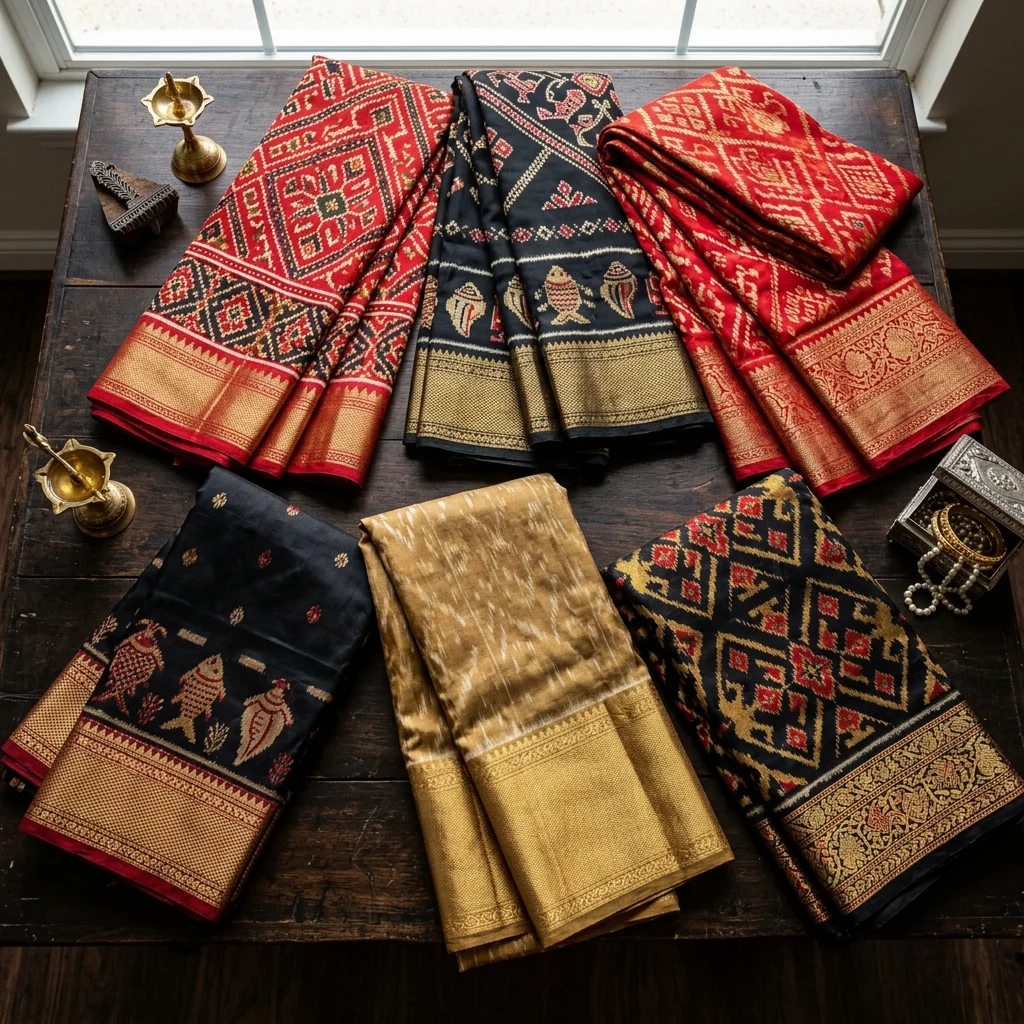
1. Sambalpuri Saree: The Masterpiece of Ikat
Originating from the western districts of Sambalpur, Bargarh, Sonepur, and Boudh, the Sambalpuri saree is arguably the most famous handloom export of Odisha. What sets it apart is the rigorous Bandha Kala (tie-and-dye) process.
Before a single thread is woven on the loom, the artisan ties segments of the yarn and dyes them. This process is repeated multiple times for different colors. When the threads are finally woven together, the intricate patterns—often featuring the Shankha (conch), Chakra (wheel), or Phula (flower)—magically align.
How to identify it:
Look closely at the motifs. Because the threads are dyed before weaving, the edges of the designs in a genuine Sambalpuri saree will have a slightly soft, "feathered" or blurred look. If the edges are perfectly sharp, it is likely a cheap machine-printed fake.
2. Bomkai Saree: The Embroidery of the Loom
Also known as Sonepuri, the Bomkai saree actually originated in the Bomkai village of Ganjam district, but was heavily developed and popularized by the weavers of Sonepur. It is a stunning fusion of two techniques: Ikat (for the body) and Extra-Weft (for the pallu and borders).
The most striking feature of a Bomkai is its pallu (the shoulder drape). The weavers use a highly complex extra-weft technique that makes the designs look like they have been embroidered onto the fabric, when in fact they are woven directly into it. The motifs are heavily inspired by nature and tribal art—you will often see bitter gourds (Karela), peacocks, fish (a symbol of prosperity), and intricate floral lattices.
Why it's a royal favorite:
Historically, Bomkai was the preferred weave of the royalty and aristocrats of Odisha due to its heavy, luxurious drape and deeply symbolic, contrast-colored pallus.
3. Khandua Pata: The Pride of Lord Jagannath
Woven primarily in the Nuapatna and Maniabandha clusters of Cuttack, the Khandua Saree is deeply spiritual. For centuries, these specific textiles have been offered to the deities of the Jagannath Temple in Puri.
Khandua is famous for being incredibly lightweight. While Bomkai feels rich and heavy, a pure silk Khandua drapes like a second skin, making it immensely popular for modern wear and summer weddings. It is characterized by its magnificent temple borders (Kumbha) and the frequent use of the Star (Tara) and Elephant (Gaja) motifs. Traditionally, a true Khandua silk is never woven with black dye, as it was considered inauspicious for temple offerings.
Discover Your Perfect Drape
Whether you desire the royal weight of a Bomkai or the lightweight elegance of a Khandua, Utkal Aditri brings 100% genuine handlooms straight from the weaver's home to yours.
Shop The Weaves